Saturday afternoon, the split AC is holding the living room down, somebody starts the dryer, and the lights blink off in half the house. Flip the breaker, everything comes back, and it does not happen again until the next Saturday. That specific pattern, where the trip only shows up when two particular things overlap, is one of the more useful complaints a homeowner can bring us, because it narrows the search before we arrive.
A breaker doing that is not malfunctioning. It is doing exactly what it was installed to do and it is telling you something you should hear.
Read the pattern before touching anything
The first thing we ask is what else was running. Not because we doubt anybody, but because the combination is the diagnostic. If the trip needs both the AC and the dryer, the two are probably sharing something they should not be sharing, or the circuit they share is carrying more than it was sized for.
If the same breaker opens with only one appliance running, that is a different animal entirely, and it points at a fault on that circuit rather than a loading problem. If it opens instantly rather than after a minute or two, different again. Instant trips smell like a short. Slow trips smell like heat and overload.
Keeping a note for a week is worth more than most of what we could do on a first visit. Time, what was on, how long before it went, and whether anything else in the house behaved oddly first.
The usual finding in an older Mililani house
Mililani Town homes were laid out from 1968 onward and the electrical was designed for the appliances of that moment. Nobody wiring a house in 1974 planned for split AC heads in three rooms. When those got added during a remodel, the installer used the circuits that existed rather than the circuits that should exist, and for years nothing complained because the loads did not coincide.
Then the household changes. Somebody starts working from home, so the AC in the back bedroom now runs at two in the afternoon instead of at nine at night. Suddenly the overlap that never happened happens daily, and the breaker starts doing its job in a way you notice.
Mililani Mauka homes, built from the nineties, usually have more circuits to work with. They are not immune, they just tend to fail in different places.
Laundry is the other repeat offender, for a reason that has nothing to do with age. A dryer running through a full cycle is a long steady draw, not a brief spike, and long steady draws are what heat a marginal connection until it lets go. A circuit that would never notice a five minute load will find its weak point somewhere in hour two.
The one thing not to do
Somebody will suggest a bigger breaker. It is easy, it is cheap, and it makes the symptom vanish. It is also the most dangerous thing you can do in a panel.
The breaker is not protecting the appliance. It is protecting the wire in the wall. A fifteen amp breaker on fourteen gauge wire is a matched pair, and swapping to twenty amps means the wire can now run hotter than its rating with nothing there to stop it. The heat happens inside a wall you cannot see. We have found this done in houses around Oahu, sometimes by a previous owner who thought they were being practical, and it is one of the few things that genuinely alarms us.
The related version is a tandem breaker jammed into a panel that was never listed to accept them, doubling the circuit count on a bus designed for a fixed number. It looks tidy from the front. Behind the cover it means more current moving through a bus stab than the manufacturer intended, and that is a heat problem with a slow fuse on it. When we pull a cover in an older Mililani panel, this is one of the first things we count.
Flickering is a separate warning
While we are on symptoms: if lights across multiple rooms dim or brighten when a large appliance kicks on, that is not the same complaint and it is more urgent. A loose neutral, whether at the panel or further upstream, makes voltage swing between circuits and it can put more than the intended voltage on electronics.
The tell is that the effect crosses circuits. A single flickering fixture is a fixture. Half the house pulsing when the compressor starts is a connection problem, and that one we would rather look at this week than next month. Homes with aluminum branch wiring have their own version of this, and any repair there has to respect the metal it is working with rather than pretending it is copper.
What the fix usually turns out to be
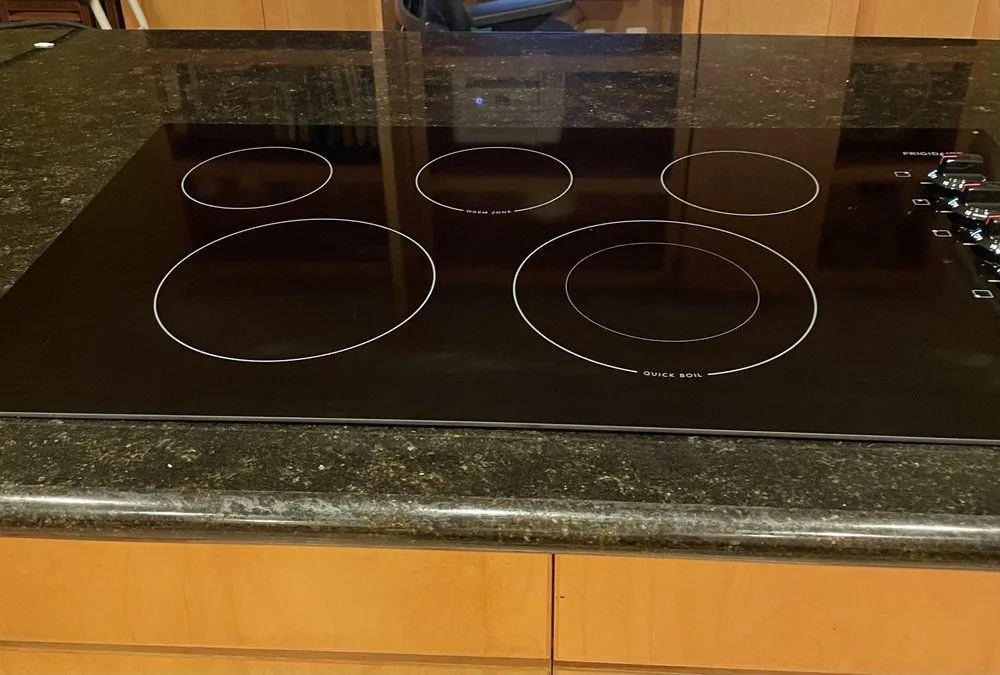
Most of the time the answer is a dedicated circuit for whatever was added last. A split AC head or an induction cooktop wants its own run, sized properly, landed on its own breaker. That is straightforward work and it ends the problem permanently rather than managing it.
Sometimes the panel has no space left, which turns the conversation toward a subpanel or a service question. Sometimes the finding is a bad connection rather than a loading issue, which is a smaller job than anybody feared. We tell you which one you have before you commit to anything. Our repair work around Mililani starts exactly here, and if the answer turns out to be new runs, what we handle across Mililani covers that too.
What homeowners ask us about tripping breakers
Is it safe to just keep resetting it?
For a short while, yes, because that is what a breaker is built to do. As a habit, no. A breaker that trips repeatedly is a breaker being asked to prove itself over and over, and the mechanism does wear. More to the point, you are treating an alarm as an inconvenience. If you are resetting the same breaker weekly, something is telling you its rating and its actual load no longer match.
Would a bigger breaker solve it?
No, and this is the one shortcut we ask people never to take. The breaker is sized to protect the wire behind it, not the appliance in front of it. Putting a larger breaker on existing wire means the wire can now get hotter than it was ever rated for without anything opening the circuit. That is how a nuisance becomes a fire, and we have found it done in houses more than once.
How do I know if it is the breaker itself?
Breakers do wear out, particularly ones that have been tripping for years, and a worn breaker will start opening below its rating. We measure the actual current on the circuit under load and compare it against what the breaker is doing. If the numbers say the load is well within range and it is still opening, the breaker is the suspect, and that is a quick fix.
Tell us what was running
Bring us the pattern and we will bring the meters. An afternoon of testing usually ends the guessing for good. Send us what you have noticed or call (808) 342-8195 and we will put the answer in writing.
Need a licensed Oahu electrician?
Jerry and the team at Sparky & Sons LLC handle it all, from a tripping breaker to a full panel. No job is too small. Clean work, island-wide.
Call (808) 342-8195Free Look