Solar Interconnect in Kailua
The code-correct electrical tie-in between your PV or battery system and your Kailua home’s service: AC disconnect, busbar sizing, line- or load-side connection, HECO and permit handled.
The panels are not the hard part. The interconnect is.
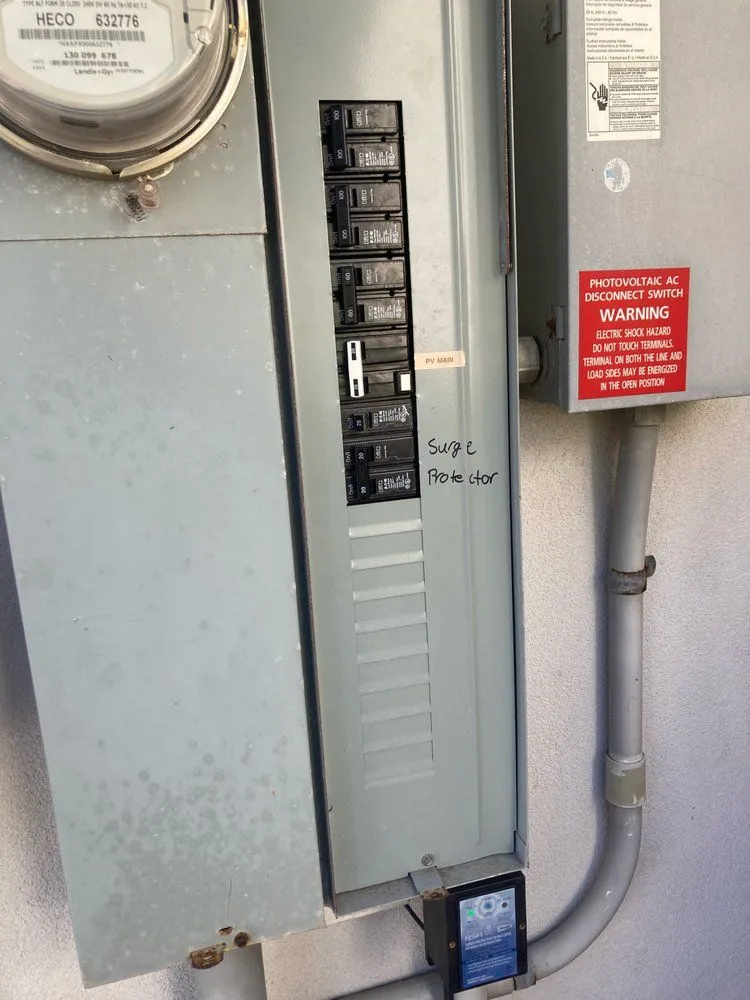
A solar interconnect is the electrical connection that ties a PV array, inverter, or battery system into your home’s service panel safely and to code. It is the AC disconnect, the backfeed breaker placement, the busbar capacity math, the line-side or load-side tap, the labeling an inspector looks for, and the HECO paperwork that has to match what was actually installed. The modules on the roof are the visible part. The interconnect is where a job passes or fails inspection.
Kailua homes run into this constantly. A 100 or 125 amp panel often cannot legally take a backfeed solar breaker under the 120 percent busbar rule, so the tie-in needs a main breaker derate, a line-side tap ahead of the main, or a service and panel upgrade. Getting that decision wrong is what leaves a system shut off for weeks waiting on a correction. We do the load calculation and the busbar math first, then tell you exactly which path your panel needs with a written number.
We are the licensed electrician that makes the connection right, whether your panels came from another installer, your old system needs to be re-tied after a panel upgrade, or you are adding a battery or EV charger to an existing array. We coordinate the HECO interconnection and net-metering side, pull the electrical permit, install the disconnect and labeling to code, and carry it through inspection so the system is legal to run, not just wired up.
Battery storage has changed a lot of these jobs in Kailua, and it is worth getting the interconnect method right when a battery is in the picture. Windward outages during Koolau squalls are a real reason homeowners here add storage to a solar array, but a battery changes the load and backfeed math and often wants a protected-loads sub-panel so the critical circuits, the refrigerator, some lighting, the internet, keep running when the grid drops. We plan the tie-in and the backup sub-panel together so the storage does what you actually bought it for, which is keeping the lights on during an outage, not just banking daytime production.
Because Kailua is a coastal town, the exterior side of the interconnect gets the same salt-air treatment as any other outdoor electrical work we do here. The AC disconnect, the conduit between the array or inverter and the panel, and any exposed fittings go in corrosion-rated and sealed, especially on Lanikai and Kailua Beach homes where standard hardware rusts within a couple of storm seasons. An interconnect that corrodes at the disconnect is both a reliability problem and an inspection problem down the road, so we build it to last on a coastal site from the start.
What’s Included
Every Kailua interconnect starts with the busbar math, not the breaker. Here is what is included.
How It Works
Four steps from your service panel to a system that is legal to switch on.
Assess Service
We read your panel, service size, and busbar rating and run the 120 percent calculation for your system size.
Engineer the Tie-In
We determine the correct method: load-side, main derate, or line-side tap, and quote it with options in writing.
Install & Label
AC disconnect, breaker or tap, and code labeling installed cleanly, with coastal-rated hardware where exposed.
HECO & Inspection
Permit and HECO interconnection coordinated and carried through inspection so the system is cleared to run.
Why Sparky
Interconnect Done to Code
Busbar math, disconnect, and labeling done right the first time so the system passes inspection and HECO.
Works With Any Installer
We tie in systems regardless of who supplied the panels, including re-ties after a panel upgrade.
Salt-Air Hardware
Exterior disconnects and conduit built for Kailua coastal exposure so the tie-in does not corrode out.
Frequently Asked Questions
What exactly is a solar interconnect?
Do you install the solar panels too?
Why might my panel need a derate or upgrade for solar?
Line-side tap or load-side breaker, which do I need?
Can you re-tie my system after a panel upgrade, or add a battery later?
I want battery backup for windward outages. Does that change the interconnect?
Will the exterior disconnect hold up to coastal Kailua salt air?
My finished solar system still is not turned on. Can you sort out the interconnect?
Get a Free Kailua Interconnect Quote
Send us your panel size and system details. We run the busbar math and quote the compliant tie-in with options.
Talk To Sparky & Sons LLC
Reach out today for a fast, no-pressure quote. We look forward to working with you.