Waipahu Solar Interconnect
Leeward sun makes a lot of Waipahu roofs a good fit for PV. We handle the electrical half: whether your panel can take a solar breaker, the tie-in itself, the HECO interconnection steps, and the circuits a battery will keep alive.
The roof gets the sun. The panel decides the rest.
Waipahu is on the leeward side of Oahu, drier and sunnier than the windward side, and that is a big part of why rooftop solar shows up on so many houses here. A lot of homeowners get as far as picking a system and a solar company before anybody opens the electrical panel. That order causes trouble. An array can be designed, sold and scheduled while the panel it has to feed was never set up to accept it.
Solar work splits between two trades. The solar installer handles the modules, the racking on the roof and usually the inverters. The electrician handles the place where that power meets your house: the solar breaker or other connection point, the disconnect, the conductors to the panel, the labels, the electrical permit and the inspection. Some homeowners call us alongside the company they picked. Some solar companies bring us in once the panel turns out to be the hold-up.
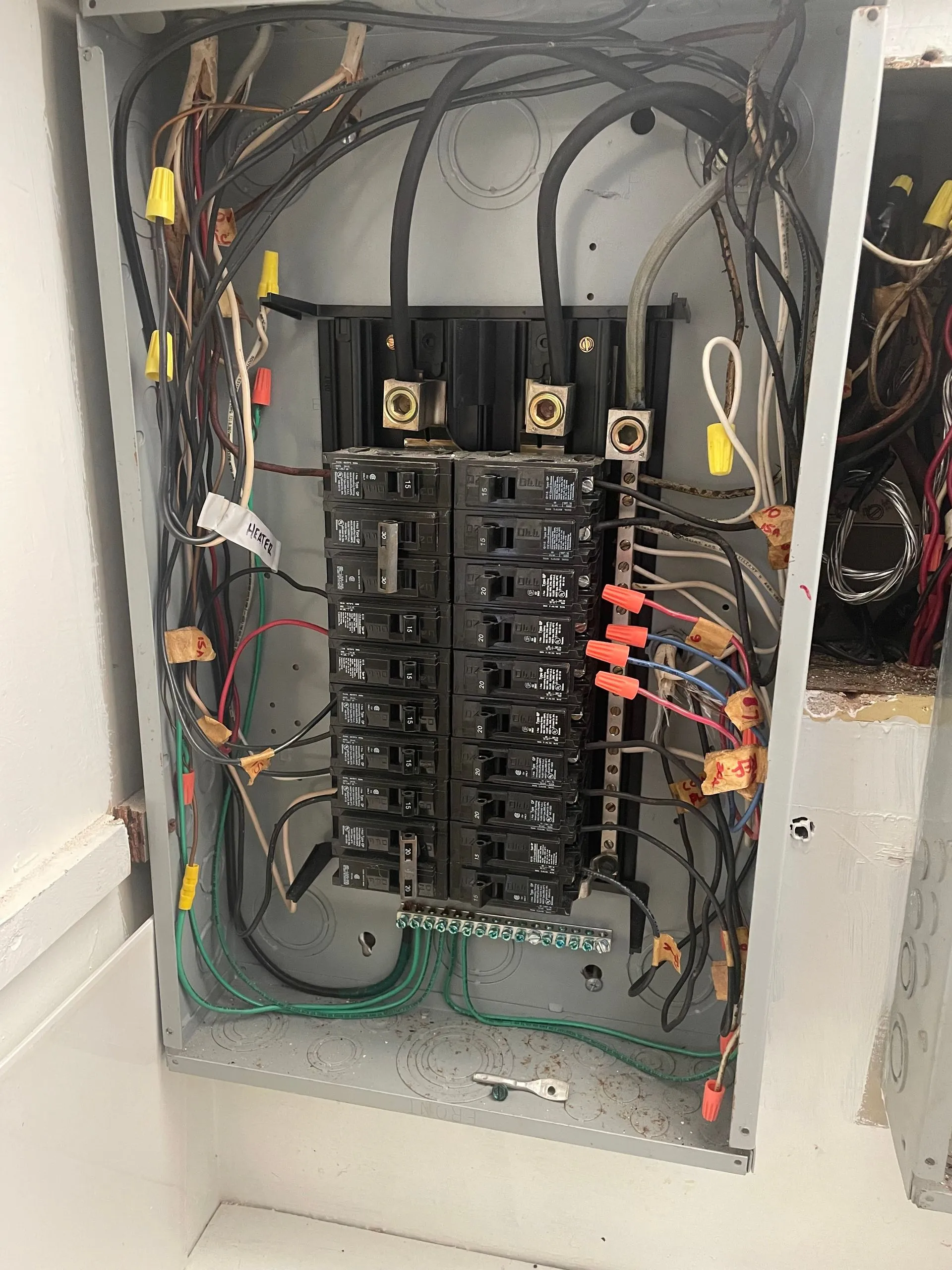
In Waipahu the hold-up is often the age of the house. Older plantation-era and mid-century homes can still be on small original services, with panels that have no open spaces left. Multigenerational households add to it, since more people under one roof usually means more refrigerators, cookers and air conditioners hanging off that same panel. Before a solar breaker goes in, we read the panel and tell you whether it can take one as it stands or needs work first. Sometimes the fix is small, like rearranging breakers to open a space. Sometimes the service itself has to grow, and it is far better to learn that while the solar contract is still a draft on your kitchen table.
Photos of recent panel work are in our gallery. If you already have a solar proposal, send it over with a picture of your panel label and we will look at both together.
Our half of a solar project
The electrical scope, from the first panel reading to a system that is cleared to run.
Deciding what stays on when the grid goes down
Batteries are where a big household has to make real choices. A battery does not usually run the whole house during an outage. It runs a set of circuits moved onto their own backed-up panel, and the size of the battery decides how long those circuits hold out. In a home with several generations under one roof, everybody has a different idea of what matters most, so we sit down with you and build the list on paper before anything gets wired.
A typical starting list goes something like this. The kitchen refrigerator and the chest freezer in the carport come first, since losing a week of food for a large family is a real loss. Then a few lights, including the path to the bathroom at night. The internet router and a couple of receptacles for charging phones. A bedroom fan for whoever sleeps worst in the heat. Anyone relying on medical equipment moves straight to the top. Heavy draws like central air, an electric range or a water heater usually stay off the backed-up panel unless the battery is sized to carry them.
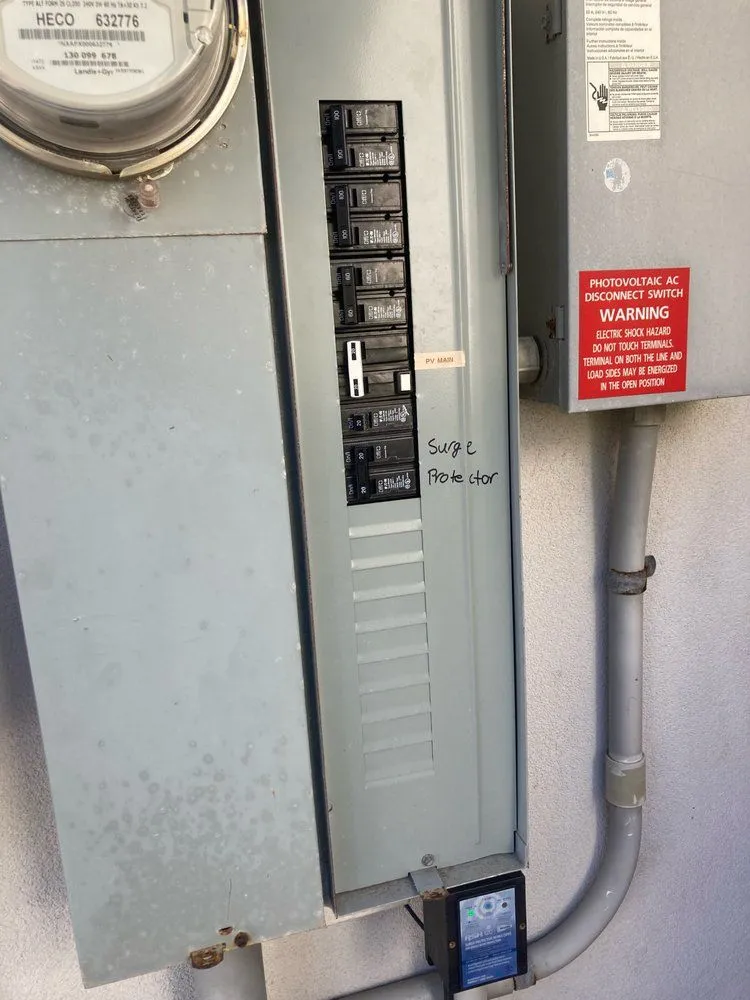
If batteries are not in the plan yet, we can still leave room for them. Setting aside space and a route for a backed-up panel during the solar tie-in means adding storage later is a smaller job, with the circuit list already agreed. It also gives your solar company a clear picture of what the household expects, which keeps the battery conversation with them short.
Paperwork and wiring in the right order
Sequence matters more on solar than on almost any other job we do.
Read the Panel
Ratings, open spaces and existing load recorded on site, with photos of the meter side.
Written Quote
The tie-in method and any panel work priced in writing, so you know before the system is ordered.
Permit and Install
Electrical permit pulled, then the breaker or connection, disconnect and labels put in.
Inspection and Turn-On
Work inspected, documents matched to the build, and the system cleared with HECO before it runs.
Working with a family shop
Panel Answers Early
We would much rather tell you about a full panel before you sign for solar than after the array is sitting on the roof.
Any Solar Company
We work next to whichever installer you choose and keep our scope to the electrical side of the job.
Jerry and His Sons
A licensed, insured family business from Honolulu. Jerry has been an electrician since 1990.
Solar questions we hear in Waipahu
Why is solar so common on Waipahu roofs?
What does the electrician do that the solar installer does not?
How do I know if my panel can accept a solar breaker?
What happens with HECO and the inspection?
What would a battery keep running for a big household?
Should the panel be upgraded before the solar goes in?
Know what your panel can take before you buy
Send a photo of your panel label, plus the solar proposal if you have one. We read both and follow up with a written quote and your options in plain language.