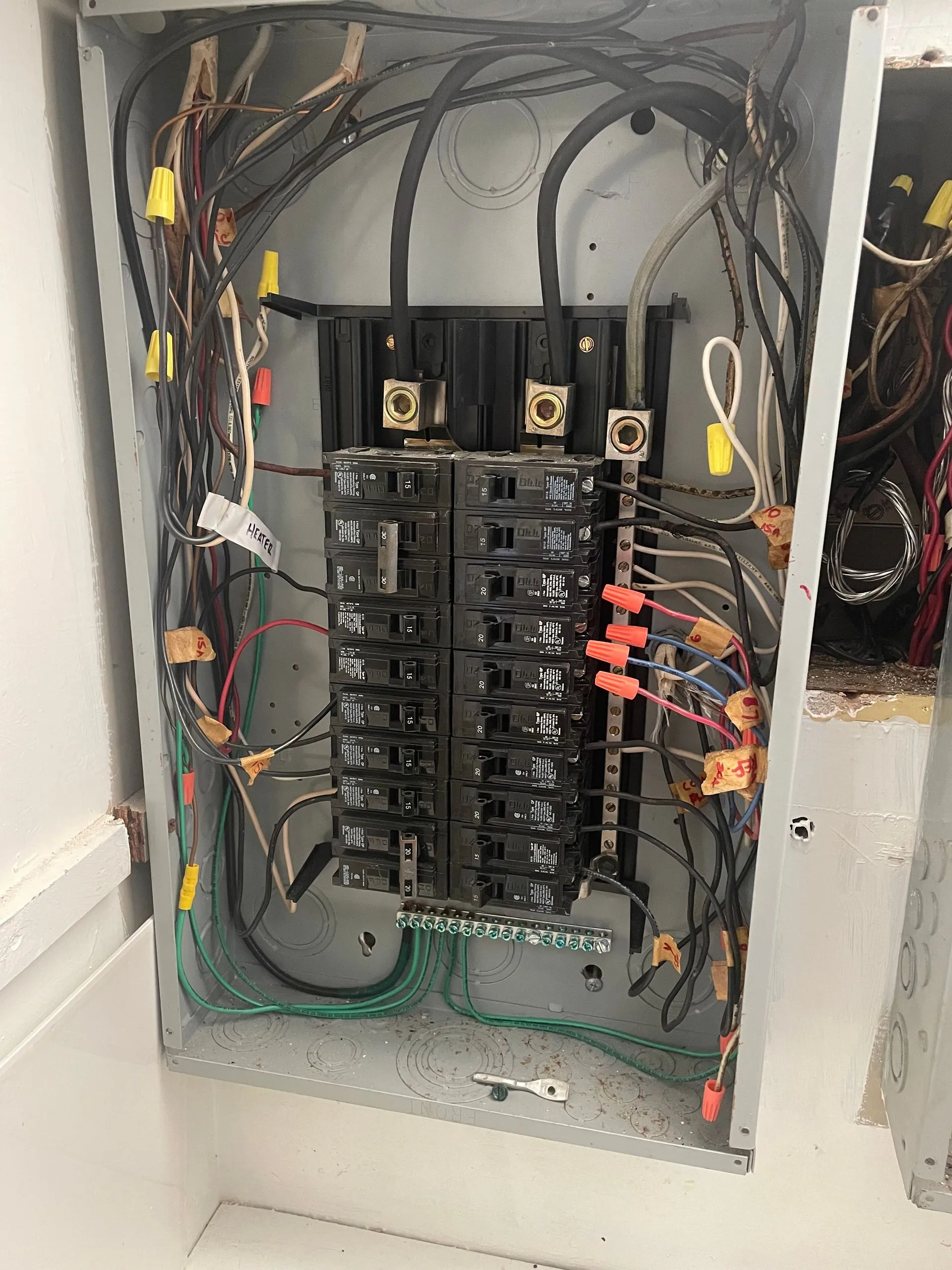
I am Jerry. I have been an electrician since 1990, and this is probably the question my sons and I answer most often in older Pearl City houses. Somebody pulls a plug out of the wall, notices there are only two slots, and wants to know whether they have been living with something dangerous.
The honest answer is that it depends on what is plugged in and what somebody did to those outlets before you got there. Let me walk through the whole thing the way I would standing in your living room.
Why the old houses have no ground
Pearl City filled in fast through the 1950s and 60s, and the electrical code of that era did not require a grounding conductor on general house circuits. The crews who wired these homes did clean work to the standard of the day. The standard changed, the houses did not, and that is the whole story behind the two slots.
What a two-prong outlet can and cannot do
A two-slot receptacle delivers power the same as any other. Your lamp, your fan, your phone charger, your TV: all of those are what we call double insulated, meaning the tool or appliance is built so a fault cannot energize anything you touch. Those are fine on an ungrounded outlet, and there are Pearl City homes running that way today with no issue at all.
Here is where it stops being fine. Anything with a metal body and a three-prong cord wants that ground for a reason. A shop vac, a window unit, an older power tool, a metal-cased appliance: if a hot conductor works loose inside and touches the housing, the ground wire is what carries that current back to the panel and trips the breaker before you ever feel it. With no ground, the housing just sits there energized, waiting for somebody to touch it and the kitchen sink at the same time. That is the whole risk in one sentence.
Sensitive electronics are the other half. Computers, home theater gear, and anything with a network cable all expect a ground reference. Without one you get more noise, more nuisance, and no protection.
The three paths that are actually legal
When we map an older home, every ungrounded circuit lands in one of these three buckets. Which one is right depends on the room, what lives there, and what the walls will give us.
1. Rewire the circuit with a real ground
This is the complete fix. We pull new grounded cable from the panel to the boxes on that circuit, and afterward those outlets are the same as outlets in a house built last year. Full protection, full function, nothing to explain to a buyer later.
The catch is access. In a single-wall plantation house with no attic crawl over that wing, getting new cable to a specific wall can mean opening finish. In a home with an accessible attic and a reasonable run, it is often much easier than people brace for. We tell you which one you have before you decide anything.
2. GFCI protection with the required label
What you get is real shock protection. A GFCI watches current going out against current coming back, and when those numbers disagree because some of it is traveling through a person, it opens in milliseconds. It does that whether or not a ground wire exists, which is exactly why the code allows this.
What you do not get is an equipment ground. Surge protection does not work, sensitive electronics have no reference, and metal-cased tools still have nowhere for a fault to go except the breaker path that is not there. That is why the label matters: the next owner, or the next electrician, needs to know what is actually behind the wall.
3. One grounded circuit where it counts
We usually sketch this as a staged plan: what gets a true ground now, what gets GFCI protection and a label now, and what gets handled the next time a wall is open anyway.
Two shortcuts that make things worse
Both of these show up constantly in older homes, and both are common enough that people assume they must be acceptable.
The first is the cheater adapter, the little grey three-to-two plug from the hardware store. That green tab is meant to be screwed to a grounded metal box, and in a house with no ground it connects to nothing. What you have done is remove the physical barrier that was stopping you from plugging a grounded appliance into an ungrounded circuit. The plug fits, so everything feels solved, and the protection is entirely imaginary.
The second is worse: a three-prong receptacle screwed onto an ungrounded box. This one I find in Pearl City houses almost weekly, usually somebody’s well-meaning weekend project from decades back. Now the wall itself is lying. You cannot see the problem, a tester tells you the ground is open only if somebody bothers to test, and every future occupant will plug grounded equipment in believing they are protected. If we find these, we tell you, because it is a defect a home inspector will find later at a much worse moment.
Surge protectors need somewhere to send it
This deserves its own mention because so many people rely on it. A plug-in surge strip works by shunting excess voltage off the hot conductor and into the ground wire. No ground wire, no place to send it. The strip will still light up green, because that light usually just says it has power, and it will do essentially nothing during a surge.
On an island where the grid takes weather and utility switching events, that matters. If you are protecting real equipment, the ground has to be real first. Whole-home surge protection at the panel is a different animal and worth a separate conversation, but at the outlet level the rule is simple: no ground, no surge protection.
What an assessment actually maps
What you get back is a map of your house and a written quote with the three paths priced against your rooms, so you can decide what to do now and what to stage. If you want the outlet work itself spelled out, our outlet installation work in Pearl City covers the whole range, from a single GFCI to a full circuit.
Get a straight answer on your outlets
If your Pearl City home still has two-prong outlets, or you suspect somebody swapped in three-prong faces along the way, an hour of testing tells you exactly where you stand. Look through past work in our gallery, send us the details of your home, or call (808) 342-8195. We will map what you have, explain it in plain language, and put the options in writing. No scare tactics, and no pressure to rewire a house that does not need it.
Frequently Asked Questions
How can I tell if an outlet is actually grounded?
A plug-in tester from the hardware store will show an open ground on a three-prong outlet, and it is worth the few dollars. It will not tell you everything, since a bootleg jumper between neutral and ground can fool a basic tester into reading correct. If you want certainty, that is what our testing pass is for, and we check polarity at the same time.
Is the GFCI route a cheap workaround?
It is a code-recognized fix, not a dodge, and it delivers genuine shock protection. What it does not deliver is an equipment ground, which is why the labels are required. We recommend it honestly for rooms where the risk is shock and the equipment is simple, and we recommend a real grounded circuit where you have electronics, metal-cased tools, or anything you plan to surge protect.
Can I just use adapters for now?
Please do not. A cheater adapter removes the one thing preventing a grounded appliance from being used on an ungrounded circuit, and it grounds nothing. If you need a three-prong receptacle in a spot today, a labeled GFCI is inexpensive, legal, and actually protects you.
Need a licensed Oahu electrician?
Jerry and the team at Sparky & Sons LLC handle it all, from a single outlet to a full panel. No job is too small. Honest pricing, clean work, island-wide.
Call (808) 342-8195Free Look