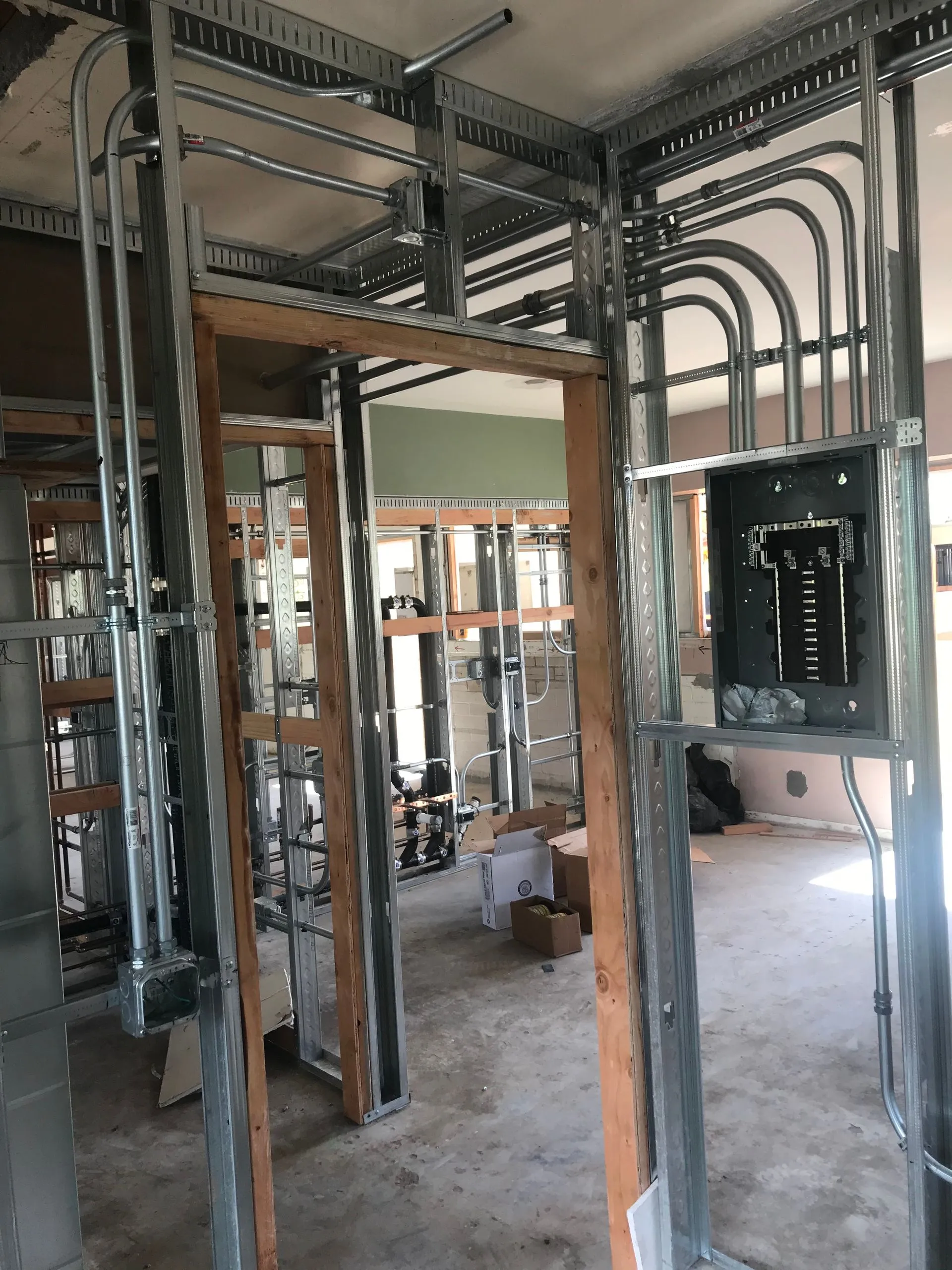
For Honolulu businesses, electrical downtime means lost revenue, spoiled inventory, and customers walking out. Proactive maintenance, panel inspections, torque checks on connections, GFCI and AFCI testing, and load management, catches problems before they shut you down. On the island grid, with salt air and high loads, it pays for itself fast.
When a circuit fails at home, it is an inconvenience. When it fails at a restaurant, a retail shop, or an office in Honolulu, it is lost revenue, spoiled product, and customers heading for the door. Commercial electrical systems work a lot harder than residential ones, longer hours, bigger loads, more equipment running at once, and on Oahu they do it in a climate that eats connections and on an island grid that has no neighboring state to lean on when something goes down. Proactive maintenance is how smart business owners avoid the 2 a.m. emergency call and the morning they have to put a “closed” sign on the door.
Why commercial is a different animal than residential
Maintaining a business is not just a bigger version of maintaining a house. The code requirements are stricter, with regular testing and documentation expected on a lot of equipment. The liability is heavier, because employees and the public are in the building and you carry responsibility for their safety. And the cost of downtime is in a different universe: a tripped breaker at home means you reset it and move on, while a tripped main at a restaurant during the dinner rush means refrigeration warming up, a kitchen at a standstill, and a dining room full of people who will not be back. The whole reason commercial maintenance exists is that the failures cost real money and the prevention is cheap by comparison.
What a commercial maintenance visit actually includes
When we come out to service a commercial property, this is the kind of work we do:
- Panel inspection. We open the panels and look for heat damage, corrosion, water intrusion, and signs of an overworked or aging system.
- Torque check on connections. Every termination is supposed to be tightened to a spec, and over time and thermal cycling they loosen. A loose connection is the number-one cause of commercial electrical fires, so we check and re-torque them.
- GFCI and AFCI testing. These life-safety devices wear out and stop protecting people. We test them and replace the ones that fail.
- Breaker and load check. We look at how heavily each circuit is loaded and find the ones running near their limit before they fail mid-shift.
- Exterior weatherhead and service inspection. The point where power enters the building takes a beating from sun, salt, and rain, and a failing weatherhead is a problem you want caught early.
- Panel labeling. A clearly labeled panel is faster and safer to work in during an emergency, so we map and label what is unmarked.
How salt air hits commercial properties harder
Commercial buildings tend to have more electrical equipment sitting outside, and that is exactly what our salt air goes after. Rooftop HVAC disconnects, exterior panels, parking lot lighting, and outdoor receptacles corrode faster on Oahu than almost anywhere on the mainland. A residential home might have one outdoor panel, but a strip mall or restaurant can have a dozen exposed disconnects and a roof full of equipment, all of it corroding at once. That is why the exterior inspection is such a big part of a commercial visit here. Catching corrosion at a rooftop disconnect before it fails saves you an emergency call in the rain.
Service agreement versus the one-time visit
There are two ways to handle this. A one-time visit is a good way to get a baseline, find the urgent problems, and clean up the obvious risks. A service agreement puts your property on a regular schedule, so the connections get re-torqued, the GFCIs get tested, and the panels get inspected on a cadence rather than whenever someone remembers. For a business with refrigeration, a lot of equipment, or public foot traffic, the agreement is usually the smarter money, because the whole value of maintenance is in doing it before the failure, not after.
What a failure actually costs
The number is different for every kind of business, which is the point. For a restaurant, a power failure means a walk-in full of spoiling food, a kitchen that cannot cook, and a closed dinner service, easily thousands of dollars in one evening. For an office, it means workstations down, servers at risk, and a team sent home unable to work. For a retail shop, the POS system goes dark, you cannot ring a sale, the lights are off, and a slip-and-fall in a darkened store becomes a liability problem. In every case, the cost of the outage dwarfs the cost of the inspection that would have prevented it.
OSHA and your obligations to your people
If you have employees, electrical safety is not optional. OSHA expects workplaces to keep electrical systems safe and maintained, panels accessible and labeled, and known hazards corrected. A documented maintenance record is part of showing you take that seriously, and it matters if an inspector ever shows up or an incident ever happens. Good maintenance is how you keep your people safe and keep yourself out of trouble at the same time.
Lighting maintenance and the LED case on Oahu
Lighting is where maintenance and savings overlap. Failing ballasts and dying fixtures waste energy and throw off light quality, and on a high-rate grid like ours that waste is money out the door every month. Retrofitting to commercial LED lighting cuts the energy bill hard, slashes the maintenance of constant bulb and ballast changes, and improves the look of the space. For a business with parking lot lighting, warehouse high-bays, or a lot of fixtures, an LED retrofit often pays for itself faster than owners expect on Oahu’s rates.
Don’t forget the EV chargers
More commercial properties are adding charging for customers and employees, and those commercial EV chargers need maintenance too. They live outside, take weather and salt, and are connected to high-demand circuits, so they belong on the inspection list. A charger that fails or trips is a customer amenity that has become a customer complaint, and keeping it serviced keeps it earning its keep.
Tell your insurance carrier about your record
Here is a practical tip owners overlook: your insurance carrier cares about how you maintain your building. A documented electrical maintenance record can support your case at renewal and matters enormously if you ever have to file a claim, because an insurer is far more willing to pay when the work was licensed, permitted, and maintained. Keep your inspection reports, and make sure your agent knows you stay on top of it.
Keep your doors open
We provide commercial electrical services and maintenance for businesses across Honolulu, Aiea, Kailua, and Kaneohe, helping you prevent downtime rather than scramble after it. Whether you run a restaurant, a retail space, an office, or a property under management, we will build a plan that fits. Take a look at our project gallery, then contact us or call (808) 342-8195 to set up an inspection.
Frequently Asked Questions
How often should a commercial building have an electrical inspection?
For most Honolulu businesses, an annual inspection is a sensible baseline, and high-demand operations like restaurants or facilities with heavy refrigeration often benefit from checking more frequently. The right cadence depends on your equipment load, your hours, and how much of your system sits outside exposed to salt air. A service agreement is the easiest way to keep it on schedule rather than relying on memory. We will recommend a frequency that matches how hard your building works.
What is the most common cause of commercial electrical failures?
Loose and corroded connections, by a wide margin. They build heat, trip breakers at the worst possible time, and can start fires. On Oahu, salt air accelerates the corrosion side of that equation, and thermal cycling from heavy daily loads loosens connections faster in commercial settings. That is exactly why torque-checking terminations is a core part of every maintenance visit we do.
What is the difference between a service agreement and a one-time visit?
A one-time visit gives you a baseline, finds the urgent problems, and cleans up the obvious risks in a single trip. A service agreement puts your property on a recurring schedule so connections get re-torqued, GFCIs get tested, and panels get inspected on a regular cadence instead of whenever something fails. For businesses with refrigeration, a lot of equipment, or public foot traffic, the agreement is usually the better value because the whole point of maintenance is catching problems before the failure. We offer both depending on what your operation needs.
Can maintenance really save money?
Yes, and it is not a close call. Preventing a single unplanned outage, the spoiled inventory, the lost sales, the emergency labor at premium rates, typically covers the cost of regular maintenance many times over. On top of that, an LED lighting retrofit cuts your energy bill every month on Oahu’s high rates. When you add the avoided emergencies to the ongoing energy savings, proactive maintenance pays for itself and then some.
Do you work around our business hours?
Yes. We schedule maintenance and larger work to minimize disruption, including off-hours and overnight when that keeps your operation running. The last thing we want to do is cost you a shift to prevent downtime. Tell us when your slow periods are and we will plan the work around them. Keeping your doors open is the entire point.
Can you handle panel upgrades and new circuits for an expansion?
Yes. We evaluate your existing service and plan commercial panel upgrades and new circuits ahead of added equipment, whether that is a new kitchen line, more workstations, refrigeration, or EV charging. Doing it proactively means your growth is not bottlenecked by the electrical system and the work is done safely and to code. It is far cheaper to plan capacity ahead of time than to discover mid-expansion that your service cannot handle the load.
Need a licensed Oahu electrician?
Jerry and the team at Sparky & Sons LLC handle it all, from a single outlet to a full panel. No job is too small. Honest pricing, clean work, island-wide.
Call (808) 342-8195Request Service