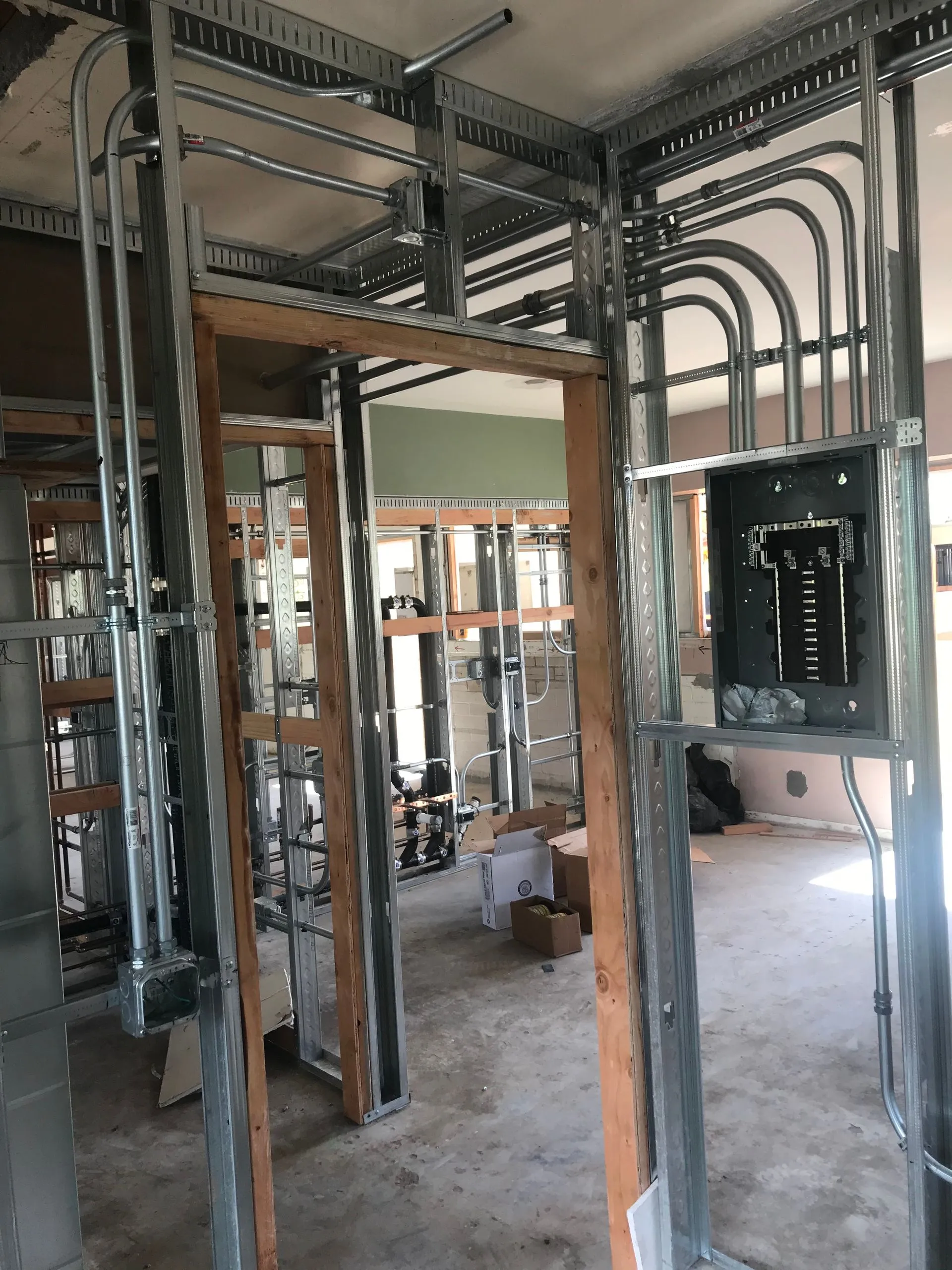
In a townhome the wiring is usually the easy part. The hard part is the association. Hawaii law does not let an AOAO flatly refuse a reasonable charger request from an owner, and in most cases the owner pays for the work and the power. What gets a board to yes is a clean packet: where the circuit starts, where it runs, who pays for the electricity, and who is liable. A licensed electrician builds that packet during one site walk.
I am Jerry. My sons and I wire a lot of Pearl City, and townhome charger calls have become their own category. The homeowner already knows what car they are buying. What they do not know is who they have to convince, and that is the piece that stalls people for months.
So this one is about the paperwork side, because in an association the paperwork comes first and the conduit comes second. If you own a single-family house and just want to know about the circuit itself, the wiring side lives in our other post on home charging for Leeward commuters. This one is for the folks with a board.
Why the board matters more than the wire
The good news is that this is a solved problem now. Hawaii boards have been handling charger requests for years, and the ones running Pearl City properties have mostly seen a few. Your job is to make yours easy to approve.
Hawaii’s EV charger law, in plain words
Hawaii has a statute covering exactly this situation, and the short version is that an association cannot simply say no to a reasonable request from an owner to put a charger in their own stall. The board can set conditions. It cannot use the rules to make the thing impossible.
What the association is generally allowed to require is reasonable and predictable:
- Licensed and insured work. Plans reviewed, permits pulled, a real contractor on the job.
- The owner carries the cost. Installation, the electricity, maintenance, and repairs are yours, not the association’s.
- Insurance and liability. Naming the association on a certificate is a common condition.
- Responsibility that follows the unit. When you sell, the obligations pass to the next owner.
- Compliance with the building’s real limits. Aesthetic and safety conditions are fair. A capacity limit is fair. Vague foot-dragging is not.
The three layouts we run into
Every townhome charger job in Pearl City falls into roughly one of three shapes, and which one you have decides the cost, the routing, and how much of the board’s attention you need.
Your stall sits near your meter
The cleanest case. Your unit’s meter is in a bank on the same side of the building as your assigned stall, and we can land a new breaker in your panel and reach the stall with a short, tidy run. The power is unambiguously yours because it comes off your meter. Boards approve these quickly, since the only common property involved is a bit of wall and a short conduit path.
Your stall is across the property
Very common, and the one that takes real design work. Your meter is at your building and your stall is somewhere else, so the circuit has to travel: along a wall, up a soffit, through a trench, across a driveway. Longer runs mean upsized conductors to handle voltage drop, and they mean the route itself becomes the thing the board reviews. This is where a drawing earns its keep, because “I would like to run a wire to my stall” gets questions and a marked-up route gets a vote.
Shared or common charging
Some associations skip individual runs and put in shared stations on common power. It solves the routing problem and creates a billing problem, which is why these projects live or die on the metering plan. If your building is heading this direction, the useful thing an owner can do is push for equipment that tracks usage per driver from day one.
Paying for the electricity fairly
This is the question that sinks more requests than anything technical. No board wants one owner charging a car on the association’s meter. Answer it before they ask, and you remove the main objection.
There are three honest ways to handle it. The first is your own meter: the circuit originates in your unit’s panel, so the electricity is already on your bill and there is nothing to argue about. The second is a submeter on a circuit fed from house power, which records exactly what your car used so the association can bill you back on a real number. The third is networked equipment that identifies the driver and handles billing itself, which is how most shared installations get run now.
Worth mentioning in the same breath: load management. Older Pearl City townhome properties do not have infinite service capacity, and a board’s quiet fear is that approving your charger commits them to a service upgrade when the next five owners ask. Load-sharing chargers throttle themselves when the building is busy and let several cars share the capacity that exists. Bringing that up yourself signals you are thinking about the property, not just your own stall.
What we document on the site walk
You get a written quote from that visit. The board gets a package that answers its questions before anyone has to ask them.
Why the drawing moves the vote
The single-line drawing is the piece that changes the temperature of a board meeting. It is a one-page diagram showing where power originates, what protects the circuit, what size the conductors are, the route across the property, and where the equipment lands.
Volunteer board members are not electricians. Handed a paragraph, they worry. Handed a drawing with a licensed contractor’s name and license number on it, they have something to attach to a motion and something to hand their property manager. Same job either way. Completely different meeting. It also means the permit application is already essentially assembled, since the City and County of Honolulu wants the same information.
One more thing to raise early if it applies: if your property is looking at rooftop solar, the charger conversation and the solar interconnect work should be planned together rather than fought as two separate battles a year apart.
Get a straight answer before you file
If you own a townhome anywhere in Pearl City and you are staring at your association’s rules wondering whether this is even worth starting, let us walk it first. We will tell you which of the three layouts you have, what it takes, and what the board will want to see. See finished work in our gallery, send us your stall and panel details, or call (808) 342-8195. Our Pearl City EV charger installation service covers the whole thing, packet through inspection, and you get a written quote before anything is committed.
Frequently Asked Questions
Can my AOAO just say no to an EV charger?
Generally not to a reasonable request from an owner wanting a charger in their own stall. Hawaii law limits an association’s ability to flatly refuse, though the board can attach reasonable conditions around licensed work, permits, insurance, and who pays. Read your own governing documents and confirm the current statute language, then submit a complete request. Most refusals we hear about are really requests that arrived too vague to vote on.
Who pays, me or the association?
In the usual arrangement, you do. The installation, the electricity your car uses, and the upkeep of your equipment are the owner’s responsibility, and that obligation typically transfers to whoever buys your unit. Shared common-area stations are the exception, since those are a property project funded the way the association funds anything else.
What if my stall is nowhere near my meter?
It is a longer run, not a dead end. We size the conductors for the distance so voltage drop stays in spec, then map a route along walls, soffits, or a trench, whichever the property allows. The route becomes the main thing your board reviews, which is exactly why we put it on a drawing instead of describing it. Longer runs cost more, and the written quote says so plainly.
Need a licensed Oahu electrician?
Jerry and the team at Sparky & Sons LLC handle it all, from a single outlet to a full panel. No job is too small. Honest pricing, clean work, island-wide.
Call (808) 342-8195Free Look