Wiring Done Before Drywall Goes Up
New construction wiring is where good electrical work earns its money, because once the drywall is up, fixing mistakes gets expensive fast. Whether you are building a new home in Áiea Heights, putting an ADU in your Kaneohe back yard, or adding a primary suite to an existing Honolulu home, the rough-in phase sets up everything that comes after. Every outlet you wish you had, every switch that ended up behind a door, every circuit that trips when two things run at once: all of that gets decided in the week or two before the insulation goes in.
Sparky and Sons does full new-construction electrical. Service entrance through HECO, panel sizing for current and future loads, branch circuit layout, every box, every wire, every termination. We coordinate with your GC, framer, and plumber so nobody is drilling through somebody else’s work. Jerry spent decades on union jobs before opening this company with his sons in 2020, and that background shows up on a job site as knowing when to be there and when to stay out of the way.
The part homeowners find most useful is the plan walk. Before we run anything, we go through the prints room by room with you and mark device locations on the studs. Where does the bed go, so we can put a receptacle and a switch on the right side? Which counter runs get their own circuits? Does the lanai want a fan box, a receptacle, and a switch leg for lights? Ten minutes of that per room saves change orders later, and it costs nothing while the walls are still open.
Timing on a build matters as much as the wiring itself. We come in after the framer has the walls and roof up and the plumber has the big drains set, so we can route around what cannot move. We rough in, get the inspection, and then get out of the way for insulation and drywall. When the finishes are close, we come back for trim-out: devices, plates, fixtures, fan hangers, panel directory, and the final inspection. Falling out of sequence on a build is what stretches a schedule, so we hold our dates and let your GC hold theirs.
For ADUs especially, a huge growth area on Oahu since the rules loosened, we know the City and County permitting requirements cold. Separate panel or sub-panel? Dedicated meter or a tap off the main? Does the existing service have room for a second dwelling at all? Those questions have to get answered before you commit to a design, because the answer occasionally changes where the unit sits on the lot. We would rather sort it out at the sketch stage than after you have paid an architect.
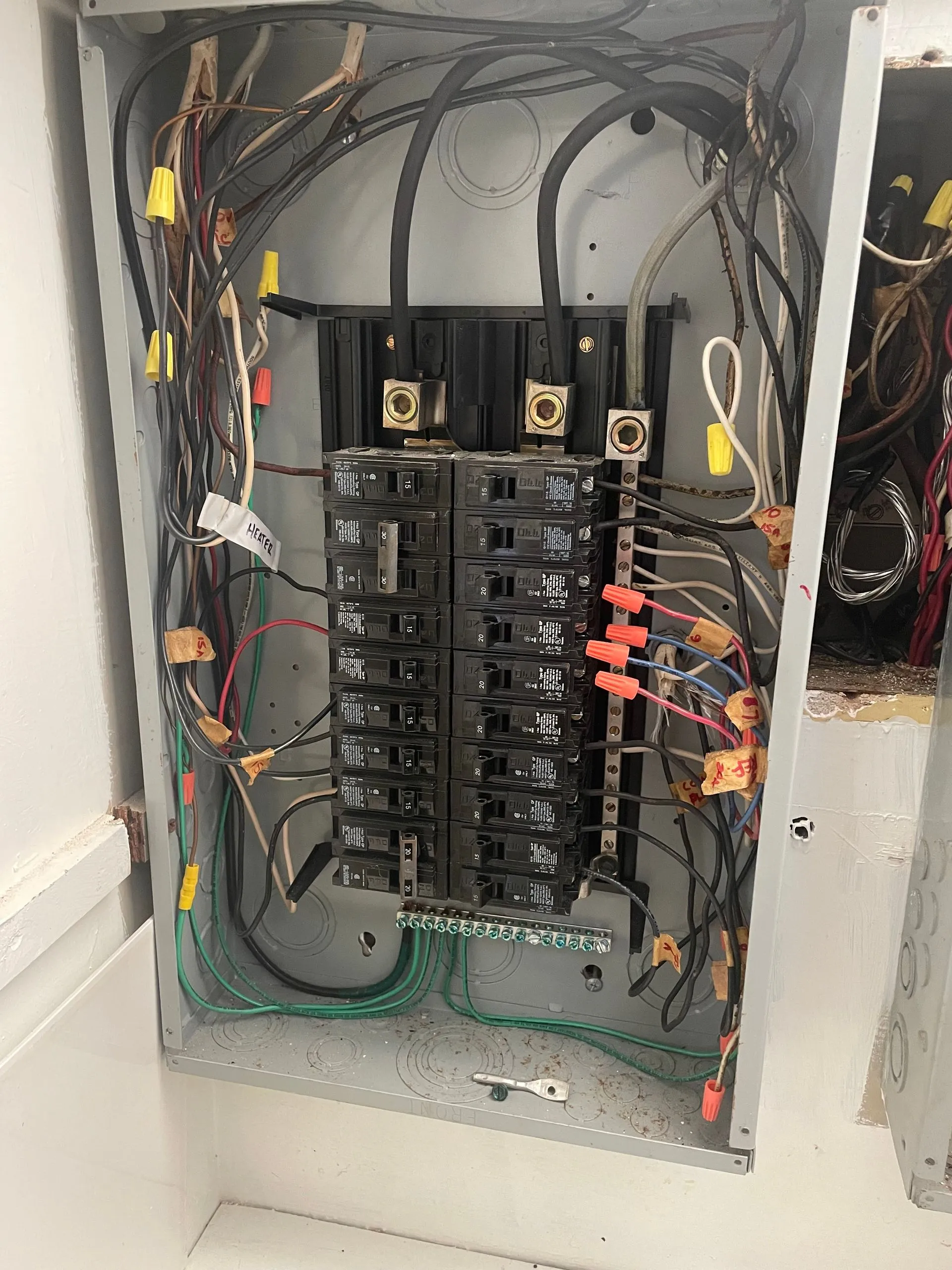
Panel capacity is the other thing we push people to think about early. The house you are building today will probably have an EV in the carport within a few years, and quite possibly a heat pump water heater and a solar system with a battery. Adding capacity while the service is being installed costs a fraction of coming back to upsize later, when it means another HECO disconnect, another permit, and another day without power. We size for the five and ten year house rather than the move-in day house, and we leave physical space in the panel for the breakers those additions will need.
Inspections happen in stages and we handle all of them. The rough-in inspection covers boxes, wire, staples, and grounding before anything is covered. The service inspection covers the meter, mast, and main panel. The final covers devices, fixtures, smoke and CO interconnect, and labeling. We are there for every one of them, and if an inspector wants something changed, we fix it and get it re-inspected rather than leaving it hanging on your certificate of occupancy.
What’s Included
Here is the full scope on a build, from the first stake in the ground through the final sign-off.
How It Works
Four steps from first call to written warranty. No surprises along the way.
Plan Review
We sit down with your prints, mark every device location on the drawing, run the load calculation, size the panel, and get on the same page as your GC before ordering material.
Permits & HECO
We pull the City and County permit and file the HECO new service application early, because utility appointments run on their calendar and not on yours.
Rough-In
All wire, boxes, panel, and meter go in after framing and before insulation. We walk the marked device locations with you one more time before the first staple.
Trim & Inspect
Devices, plates, and fixtures go in once the finishes are done, the panel gets a typed directory, and we meet the inspector for the final sign-off.
Why Sparky
Plan Reading
We work from your blueprints instead of guessing, and we coordinate with the framer, the plumber, and the GC so our rough-in does not collide with theirs.
Future-Sized
The panel gets sized for tomorrow’s EV charger, heat pump, and induction range, with breaker space left open on purpose rather than filled to the last slot.
Permitted & Inspected
Every job permitted through City and County, inspected at each stage, and signed off, so your certificate of occupancy does not stall on an electrical correction.
ADU Experience
We have wired enough accessory dwellings on Oahu to know where the permitting friction is and how to size a feeder that will still be right if the unit gets rented out.
We Hold Our Dates
Builds run on sequence. When we say we will be roughed in by Friday, your drywall crew can book Monday and not eat a week of standby.
Thirty-Plus Years on Tools
Jerry has been an electrician since 1990 and worked union jobs until 2019. His sons came up under him. That is who is running wire in your walls.
Frequently Asked Questions
Do I need a separate panel for my ADU?
What size panel should a new build have?
How long does rough-in take?
Do you handle the HECO coordination?
When during the build should I bring the electrician in?
Can I add outlets and switches after rough-in starts?
Get a Free New Construction Wiring Quote
Written quote on the first visit. No surprise charges and no salesman act, just a licensed electrician answering your questions.
Send Us Your Plans
Whether it is a new build, an addition, or an ADU out back, get us the drawings and we will price the electrical and tell you what the schedule really looks like.