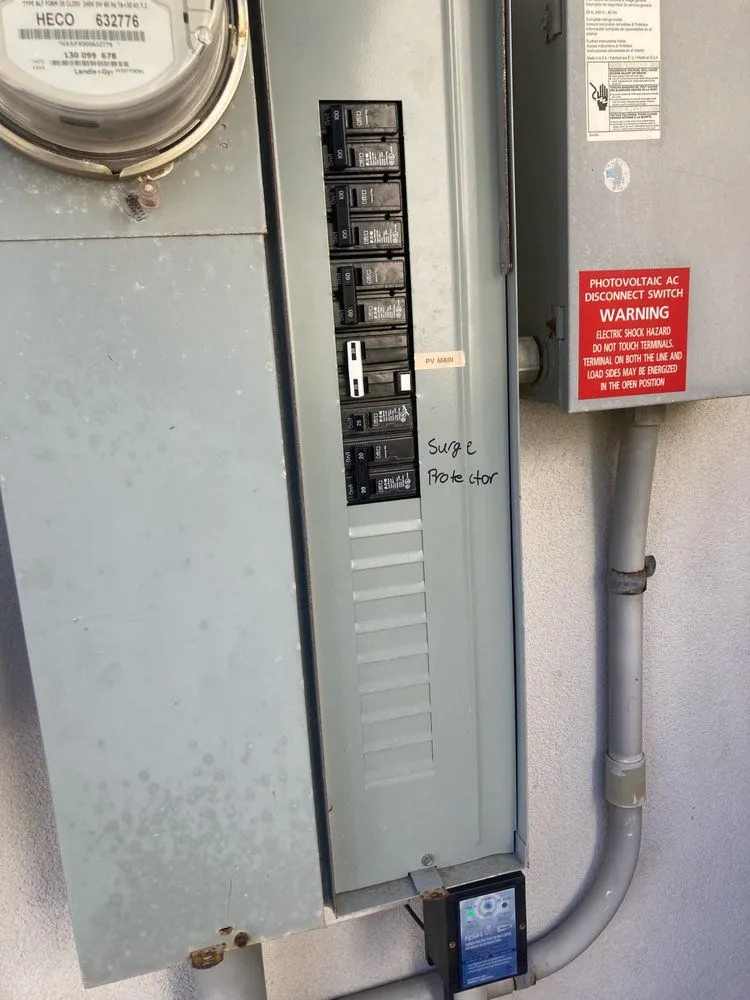
The same ocean air that makes Aiea beautiful is quietly eating your electrical system. Salt and humidity corrode panels, outlets, fixtures, and grounding hardware years faster than they would age on the mainland. The damage is slow and mostly hidden, so the smart approach is watching for the warning signs, using corrosion-resistant hardware in exposed spots, and having a periodic inspection so a small problem gets caught before it becomes a failure or a fire.
Aiea sits above Pearl Harbor with the coast never far off, and while we are not right on the beach, the trade winds carry ocean air across the whole area. That air is the reason our sunsets glow and our afternoons stay comfortable, but it also carries something your electrical system does not appreciate: salt. Combine airborne salt with the year-round humidity, and you get a climate that ages metal, and electrical systems are full of metal.
I am Jerry, and my sons and I have opened up a lot of Aiea panels and boxes over the years, from Halawa and Pearlridge to Newtown and up in Aiea Heights. The pattern is consistent: coastal homes here show wear that would take decades longer to appear somewhere dry. Understanding why helps you get ahead of it instead of getting surprised by it.
How salt air actually causes corrosion
Corrosion is a chemical reaction, and salt and moisture are the ingredients that speed it up. Tiny salt particles ride the wind and settle onto every surface, including the metal inside your panel, your outlets, and your outdoor fixtures. Then our humidity adds a thin film of moisture, and that salty film becomes an electrolyte, a solution that lets the corrosion reaction run. On protected metal, the reaction eats through the zinc or other coating first, then goes after the steel or copper underneath. This is why a panel or a fixture that would look fine for thirty years in the desert can show real corrosion in a handful of years here.
The reaction is worse where two different metals touch, like where an aluminum wire lands on a copper or steel terminal. That contact point corrodes faster, the connection loosens, and a loose connection is where heat and trouble begin.
What gets hit first
- Electrical panels: the cabinet, the breakers, and the bus and lug terminations. Corroded breakers can seize, and corroded terminations run hot.
- Outdoor outlets and fixtures: anything on an exterior wall, a lanai, or a carport takes the direct hit of salt-laden air.
- Grounding hardware: the grounding electrode and its connections degrade, and a poor ground undermines the safety of the whole system.
- Conduit and fasteners: screws, straps, and metal conduit rust, which weakens the physical support and can let moisture in.
- Connections everywhere: the terminations where wires meet devices are the quiet weak point, because corrosion there raises resistance and generates heat.
Why corroded connections are the real danger
It is tempting to think of corrosion as just an appearance problem, some green or white crust on metal. The real hazard is what it does to connections. Electricity flows easily through clean, tight metal-to-metal contact. When corrosion builds up at a termination, it raises the resistance at that point, and resistance turns electrical energy into heat. A connection that heats up under load can scorch insulation, damage the device, and, in the worst case, start a fire inside a wall or a panel where you would never see it coming. Most electrical fires trace back to bad connections, and in a coastal climate, corrosion is one of the leading reasons those connections go bad.
The warning signs to watch for
Because the damage is slow and mostly hidden, you have to know what to look for. Flickering lights or outlets that work intermittently can point to a corroded connection. Breakers that trip for no clear reason, or a breaker that will not reset cleanly, can be corrosion at work. A warm or discolored outlet, a faint burnt smell near a panel or fixture, or visible rust and crusting on any electrical hardware you can see are all signs to take seriously. Outdoor fixtures that stop working, or a lanai outlet that has quit, are classic coastal corrosion stories. If you notice any of these, it is worth having it looked at before it progresses.
How to slow it down
You cannot change the climate, but you can build a system that stands up to it. The most effective steps are straightforward. In exposed and outdoor locations we use corrosion-resistant hardware, sealed and weather-rated enclosures, and stainless where it counts, because those materials last far longer in salt air than standard hardware. At connection points, and especially where aluminum meets copper, an anti-oxidant compound slows the corrosion that attacks those junctions. Sealing conduit entries and using proper covers keeps moisture and salt from working their way inside. And keeping terminations tight matters, because corrosion and loosening feed on each other.
The single most valuable habit, though, is a periodic inspection. Because so much of this damage happens out of sight inside the panel and behind covers, a professional look every so often catches corrosion while it is still a cleanup and a retightening rather than a replacement or a failure. On a coastal Aiea home, that check is cheap insurance. We open the panel, look at the breakers and terminations, check the grounding, inspect the outdoor devices, and treat and tighten what needs it.
When to consider bigger fixes
Sometimes an inspection turns up corrosion that has gone past a simple cleanup. A panel cabinet that is rusting through, breakers that are seized, or terminations that are badly degraded may mean it is time for a panel upgrade or a partial rewire of the most affected circuits. That is not a scare tactic, it is the honest answer when the hardware has aged out. We will always tell you straight whether you are looking at maintenance or replacement, and we would rather catch it early, when it is the smaller job, than after a connection has failed.
Stay ahead of the salt
Aiea’s ocean air is not going anywhere, but corrosion does not have to catch you off guard. We inspect, protect, and repair coastal electrical systems across Aiea, Halawa, Pearlridge, Newtown, and Aiea Heights, using hardware and methods built for salt air. See our gallery, learn more about troubleshooting and repairs, or get in touch and call (808) 342-8195 for a free quote.
Frequently Asked Questions
I am not right on the water. Does salt air still affect my home?
Yes. Aiea sits above Pearl Harbor with the coast nearby, and the trade winds carry ocean air across the whole area, not just the beachfront. Salt particles ride the wind inland and settle on surfaces, including the metal inside your panel and outlets. Combined with our humidity, that is enough to speed up corrosion well beyond the beachfront homes.
How much faster does electrical hardware corrode here?
There is no single number, but coastal homes routinely show wear in a handful of years that would take decades to appear in a dry climate. Outdoor outlets, panel terminations, and grounding hardware are the usual first casualties. That is why hardware ratings and periodic inspections matter more here than most homeowners expect.
Is corrosion actually dangerous or just ugly?
It is dangerous, not just cosmetic. Corrosion at a connection raises resistance, and resistance turns into heat under load. A hot connection can scorch insulation, damage devices, and in the worst case start a fire inside a wall or panel. Most electrical fires trace back to bad connections, and in a coastal climate corrosion is a leading cause of those bad connections.
What are the warning signs I should watch for?
Flickering or intermittent outlets, breakers that trip for no clear reason or will not reset cleanly, a warm or discolored outlet, a faint burnt smell near a panel or fixture, visible rust or crusting on electrical hardware, and outdoor fixtures or lanai outlets that stop working. Any of these is worth having checked before it gets worse.
How do I slow the corrosion down?
Use corrosion-resistant, weather-rated hardware and sealed enclosures in exposed spots, apply anti-oxidant compound at connections, especially aluminum-to-copper, seal conduit entries, and keep terminations tight. Most importantly, get a periodic inspection so hidden corrosion inside the panel is caught while it is still a cleanup rather than a failure.
How often should a coastal home be inspected?
For a coastal Aiea home, a periodic professional inspection is worthwhile because so much of the damage is hidden inside the panel and behind covers. We open the panel, check the breakers, terminations, and grounding, inspect the outdoor devices, and treat and tighten what needs it. Catching corrosion early keeps it a small job instead of a big one.
Need a licensed Aiea electrician?
Jerry and the team at Sparky & Sons LLC handle it all, from a coastal inspection to a full panel. No job is too small. Honest pricing, clean work, island-wide.
Call (808) 342-8195Request Service